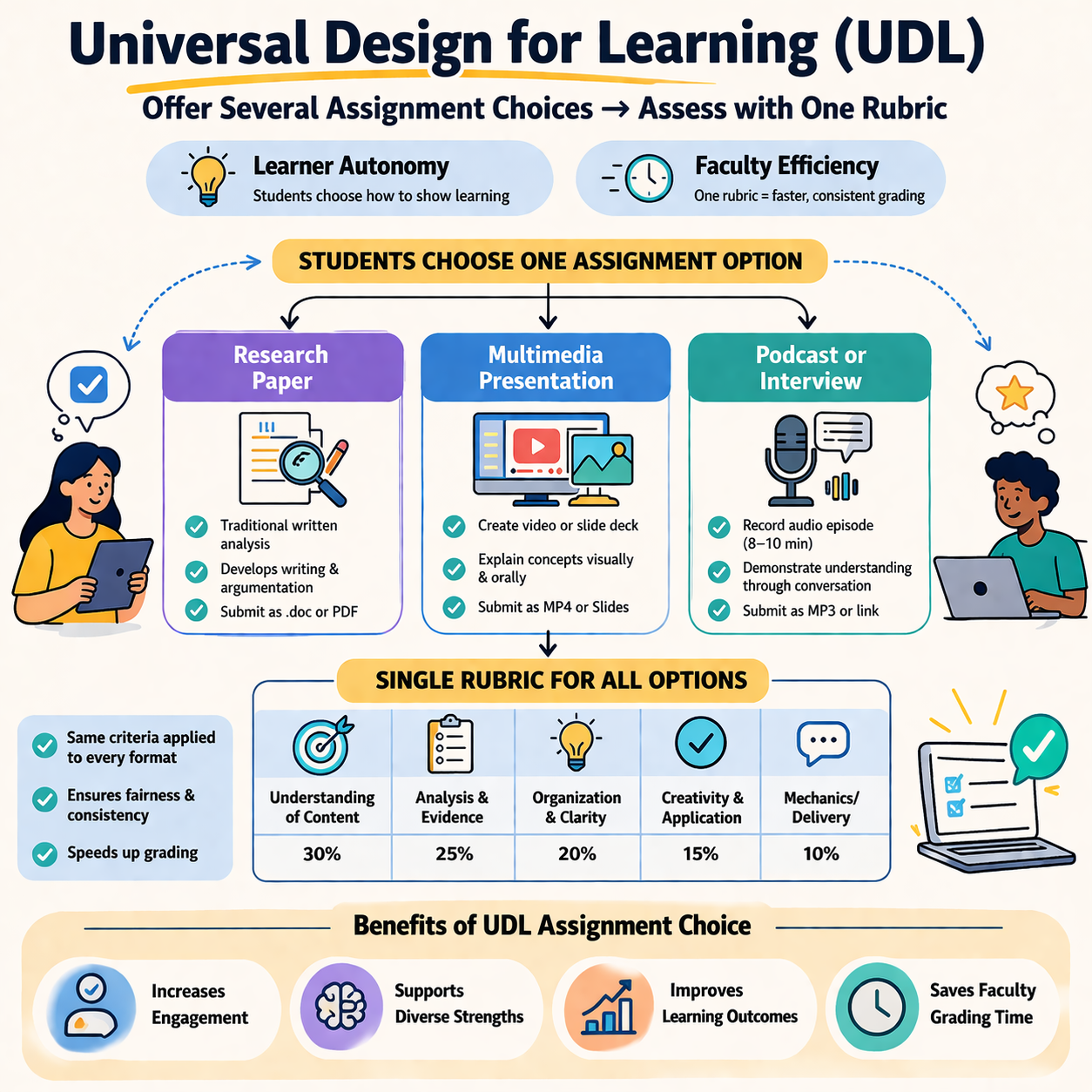
Over the past several years, USC Upstate faculty have worked diligently to revise and update course materials and are well prepared to meet the April 2026 WCAG compliance deadline. These efforts have resulted in more accessible PDFs, PowerPoint presentations, documents, images, and videos, expanding access to barrier-free course content to a wider range of students. As we build on this important technical foundation, we also have opportunities to think more broadly about accessibility in course design, including how emerging practices like Role, Context, and Task Prompt Engineering can expand the adoption of more Universal Design for Learning practices.
Continue reading “Using AI to Expand Universal Design for Learning”
AI Resilient Learning is All Around Us
Thinking aloud is a simple yet powerful cognitive tool that anyone can use. When students verbalize their thinking process, they slow down, clarify their understanding or misunderstanding, and make their implicit knowledge explicit. They’re not just giving an answer; they are explaining the how and the why of the answer.
Continue reading “AI Resilient Learning is All Around Us”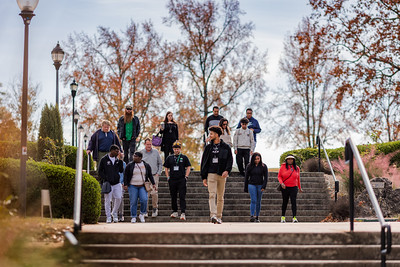
What Students Want
At the start of each semester, CAIFS hosts a very short and optional Blackboard Ultra Quick Start course for incoming students. The goal of the course is to invite students to explore the LMS and try out the discussion board, assignment submission, and Yuja video quiz so they have some level of familiarity and comfort with the learning environment before classes begin. The discussion board prompts students to discuss how comfortable they are with digital tools and to share some goals for the semester ahead and how they plan to achieve them. Of the students who engage with the course, almost all of them say they feel pretty comfortable with different digital tools, they want to establish and maintain a 3.5 GPA or higher, and they hope to meet some friends. These qualities and experiences that they hope for all contribute to and support student well-being and belonging. So what can we do to help students expand their tech skills, get the most from their courses and major, and find some friends?
Expanding 21st Century Tech Skills
Now that USC Upstate students have shared with us that they feel pretty comfortable with common tech tools, what can we do to increase their comfort with and use of 21st-century skills? One consideration is to embed technology use within authentic disciplinary tasks rather than treating technology as a standalone skill or course. We might ask students to use technology to analyze data, collaborate digitally, evaluate content and sources for accuracy, and communicate to different audiences across multiple platforms. Designing assignments that require students to select tools intentionally, document their decision-making, iterate based on peer and instructor feedback, and reflect on ethical considerations, like accessibility, data privacy, and AI use, can improve student motivation and engagement. It also invites students to build durable, transferable skills beyond specific tools or disciplines. If you’re interested in learning more about tech-integrated authentic assessment, explore Digital Authentic Assessments (DAA) in the article, Authentic Assessment in Higher Education: The Role of Digital Creative Technologies.
Nurturing Academic Persistence and Career Readiness
Faculty can also play a role in supporting students as they reach their academic and career readiness goals. Instructional practices that support persistence, like transparent assignments, scaffolded skill development, timely and actionable feedback, and opportunities to revise, build students’ confidence and sense of belonging, especially in 100 and 200 level general education courses. At the same time, students are interested in their career prospects and rely on faculty to make disciplinary skills explicit, to provide access to simulations or applied projects, and to guide them through the practice of communication, collaboration, and problem-solving like a historian, nurse, educator, or other professional. Small shifts in how we describe our assignments can make a huge impact: by naming the transferable skills, inviting students to reflect on how course learning connects to several careers, and aligning assessments with career-focused expectations, we can guide students toward achieving their academic and career goals. To learn more about integrating career readiness into your courses, reach out to Lillian Reeves (reeveslg@uscupstate.edu) to learn about how to access ACUE’s Quick Study course on that topic.
Finding Friends
While students have plenty of opportunities outside of class to meet people, they also spend a lot of time in class, which makes it the perfect place to meet a friend or two. Faculty can play a small, but powerful role in helping students meet their peers by designing classes that make connections feel natural. Small group work, low-stakes peer discussions in the early parts of the semester, and in-class collaborative projects with clearly defined roles can give students the repeated opportunities they need to get to know each other. When students have opportunities to speak and be listened to, community can emerge. To learn more about how to nurture the kinds of connections that lead to student success or to add some new strategies for building community to your practice, visit Elon’s Center for Engaged Learning and read the free copy of Peter Felten and Colleague’s book, Connections are everything: A college student’s guide to relationship-rich education.
Students come to college often full of hope and nerves. In recognition of both, we can listen to their aspirations and create opportunities for them to achieve their goals and make lasting connections with peers, faculty, and staff. Evidence across institutional size, rank, and geographic location in the United States has shown that relationships enrich the college experience and strengthen students’ sense of belonging immeasurably. In this way, fostering connections becomes a powerful – if often overlooked – dimension of student success.

Detection, Dialogue, and Innovation in Classroom Uses of AI
Despite the relative newness of AI tools for all, surveys conducted by the Digital Education Council, Chegg, and TechTrends found that more than 80% of students have already built AI into their learning lives. According to the survey results, students are using tools like ChatGPT, Grammarly, and CoPilot primarily to search for information, check grammar and improve their writing, summarize and paraphrase documents, create first drafts, explain complex concepts, and suggest research projects.
While these efforts provide students with several benefits, students remain skeptical of AI’s accuracy. Chegg’s survey found that 53% of students were concerned about content reliability and the ethical implications of using the tools. They also were worried about data privacy and whether or not using AI tools diminished their ability to think critically. As we all continue to navigate AI’s uses in higher ed, having a plan for AI use and talking candidly with students about your expectations and theirs, may reduce some of the uncertainty everyone has about when and where to use AI.
Continue reading “Detection, Dialogue, and Innovation in Classroom Uses of AI “
Building Classroom Connections, One Name at a Time
Peter Felten recently gave a memorable workshop for USC Upstate’s Fall Faculty Day. In addition to being a kind, funny, and passionate student advocate, he left us with plenty to think about – and to act on – as we launch into the fall semester. Much of his research shows that small adjustments in faculty and staff interactions with students can make a huge impact. One such small adjustment may be learning our students’ names in the first few weeks of class. Learning and using students’ names builds trust and can help create a supportive and inviting classroom environment. It also forms the basis for how we can ensure every student experiences “genuine welcome and deep care. All students need to understand that they are valued as people.
Continue reading “Building Classroom Connections, One Name at a Time”
How Star Wars is Your Course?
In a recent video from Innovative Educators, Tom Tobin gives a short overview of what we can learn from Star Wars about making accessible places where intergalactic beings and droids can easily get around and communicate with each other. He highlights the consistent use of ramps, wide doors, limited or no stairs, and translation devices. Other Star Wars features include personal mobility devices that look like furniture or speeders, droid medical, automotive, and air traffic technicians and AI-assisted companions, sensory-rich and sensory-adjustable environments, fully accessible government, educational, medical, and community spaces, and wearable personal navigation tools. While some of these enduring, universal design features were meant to help us imagine an exciting galactic future, the film team of the franchise’s first movie was comprised of people from across the ability spectrum who used their needs and knowledge to intentionally shape and show a more accessible, usable world where anyone could be a hero.
Continue reading “How Star Wars is Your Course?”