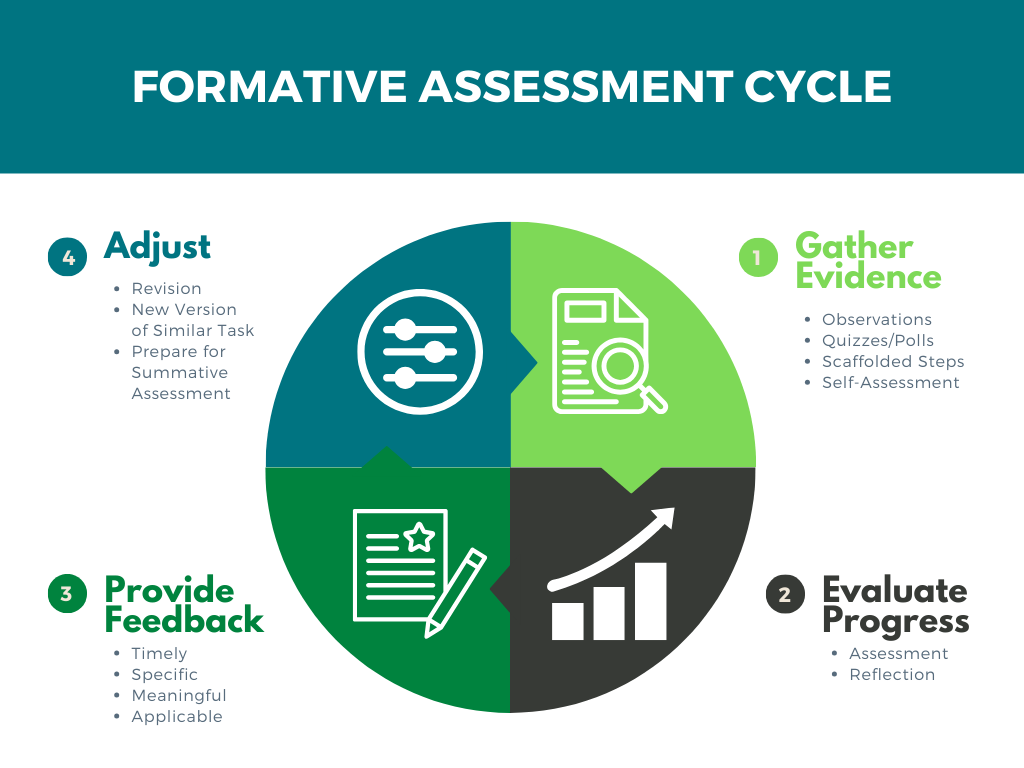
Formative Assessment Cycle: Gather evidence in quizzes, observations, self-assessments; Evaluate Progress and interpret growth; Provide Feedback that is timely, specific, and meaningful; Adjust Process to update activities, add/remove checkpoints to improve the quality of evidence of progress

Formative Assessment and Success-Oriented Feedback

Formative assessment is often discussed in K-12 settings as a standard and expected part of curriculum delivery. In higher education, however, conversations about formative assessment have been somewhat more elusive. Traditionally, we rely on the high-stakes midterm, project, paper, final model which leaves little room for formative assessment that can foster growth.

Using formative assessments is a valuable curriculum practice that allows faculty and students to monitor student progress toward completing larger, summative assessments and achieving the course’s learning objectives. But what makes formative assessment a valuable tool for academic progress?

Continue reading “Formative Assessment and Success-Oriented Feedback”
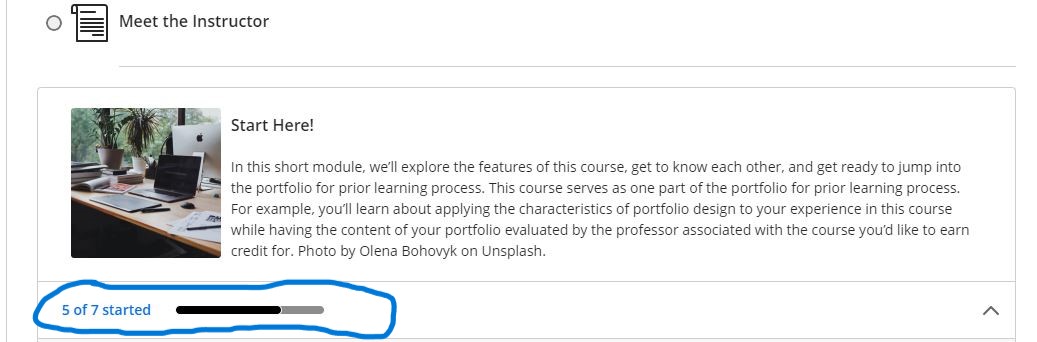
Screenshot of a module showing how much of a module is complete

Making the Case for Modules

Are we ready for modules?  

 Yes! And there is no better time to switch to modules from nested folders. In Blackboard Original, faculty were able to use the folder system just like the content containers on our computers. A file for P and T: files for service, teaching, scholarship; and within scholarship an articles folder; and in that folder works published for 2021, 2022, 2023; articles in the works that didn’t get published yet; and within that folder, proposals for any number of my million dollar ideas… anyone else have one of those? By the time we’ve gotten to the million dollar idea folder, we are eight folders deep in clicking and scanning. 

Continue reading “Making the Case for Modules”
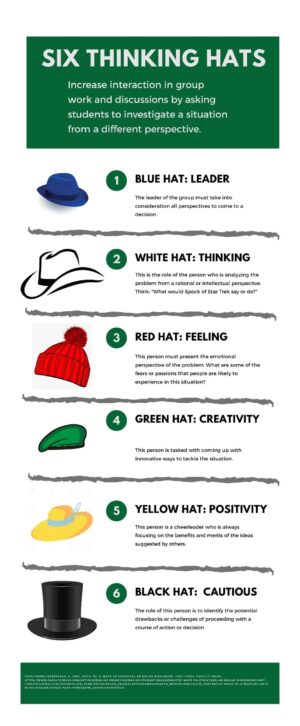
SIX THINKING HATS Increase interaction in group work and discussions by asking students to investigate a situation from a different perspective. Hats represent roles for leader, thinking/logic, feeling, creativity, positivity, and cautious

Group Work and Collaborative Learning

Collaborative learning is a well-established high-impact practice (HIPs). According to the Association of American Colleges and Universities, collaborative learning has two main goals: the first is to have students work together to solve problems or find solutions. And the second is for students to gain access to perspectives, experiences, and information they may have not yet considered or had access to.  Collaborative learning can be a small pair-share experience after a micro-lecture or it can be a larger, weeks-long group research project.

Continue reading “Group Work and Collaborative Learning”