Attending college, like other big moments of transition in our lives, is full of exciting and nerve-racking opportunities for learners everywhere to give an emphatic or shaky yes! to the newness of people, places, and ideas. But how do students get the most out of these opportunities?
Continue reading “College is Just the Place for Transformative Experiences”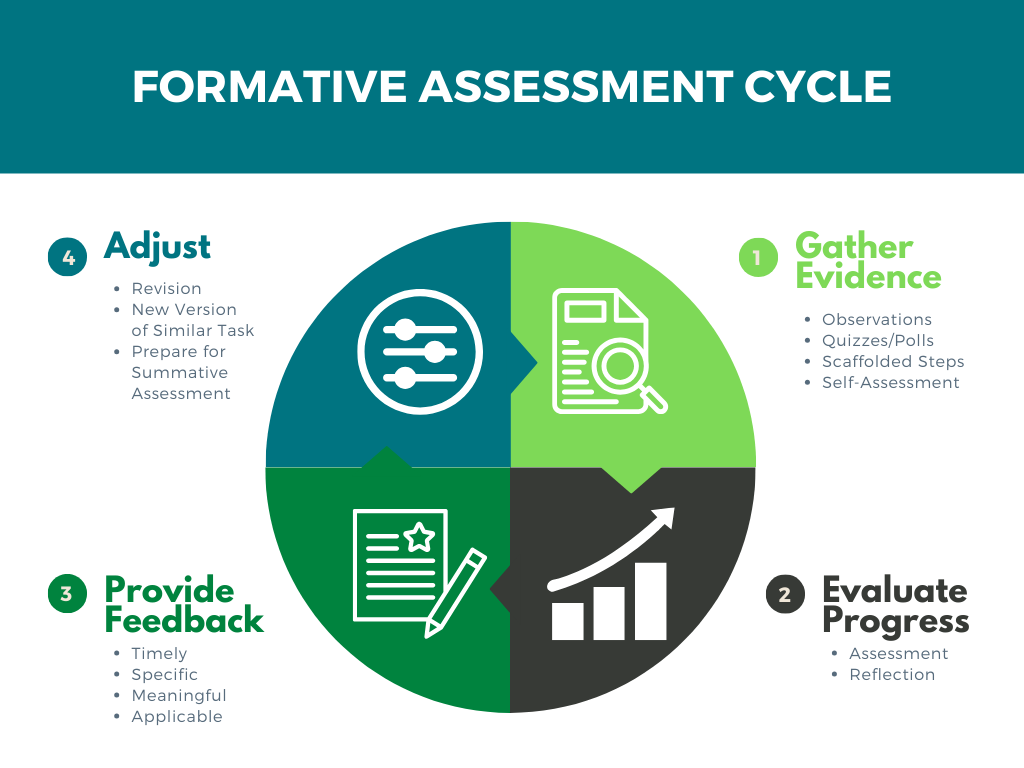
Formative Assessment and Success-Oriented Feedback
Formative assessment is often discussed in K-12 settings as a standard and expected part of curriculum delivery. In higher education, however, conversations about formative assessment have been somewhat more elusive. Traditionally, we rely on the high-stakes midterm, project, paper, final model which leaves little room for formative assessment that can foster growth.
Using formative assessments is a valuable curriculum practice that allows faculty and students to monitor student progress toward completing larger, summative assessments and achieving the course’s learning objectives. But what makes formative assessment a valuable tool for academic progress?
Continue reading “Formative Assessment and Success-Oriented Feedback”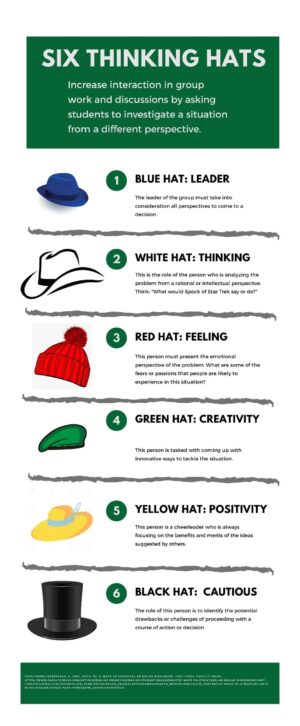
Group Work and Collaborative Learning
Collaborative learning is a well-established high-impact practice (HIPs). According to the Association of American Colleges and Universities, collaborative learning has two main goals: the first is to have students work together to solve problems or find solutions. And the second is for students to gain access to perspectives, experiences, and information they may have not yet considered or had access to. Collaborative learning can be a small pair-share experience after a micro-lecture or it can be a larger, weeks-long group research project.
That’s a Wrap! Using Exam Wrappers to Encourage Reflection

By Jennifer Bland
Have you ever been curious about how much your students are studying for exams, what material they are studying, and how they are preparing for exams? Exam Wrappers are one way for you to gather this information from your students. An Exam Wrapper is a written exercise the student completes immediately before or after a graded exam is returned. It is typically completed outside of class for little or no credit, students respond to prompts that require them to reflect on what they did to prepare for the exam, what happened during the
exam, and what they will do to prepare for the next exam to improve performance (Chen, 2016).
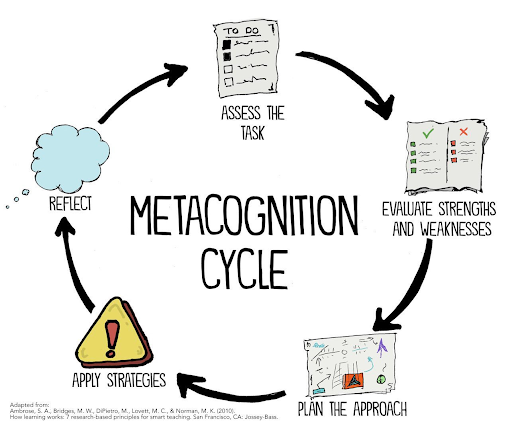
Exam Wrappers are good metacognitive exercises for your students to reflect on their learning and the study strategies they used to learn the material. Metacognition is thinking about your thinking. The Center for Teaching at Vanderbilt University describes metacognition as the “processes used to plan, monitor, and assess one’s understanding and performance” (Chick, 2013). Students need to be taught how to monitor and assess their learning and thinking, which is why exam wrappers can be helpful.
Many times students will study for an exam, take the exam, then not think about how their study habits or preparation affected the outcomes of the exam or how they could make better habits for a better outcome. Students also may not think about what they learned and did not learn and what they should continue to work on to be ready for the final exam. By asking your students to complete the reflective questions, you are guiding them through the metacognitive process.
Your exam wrapper could take on different forms. You may want to add a few questions at the end of the exam for students to complete. You could add it as a separate assignment after they complete the exam. Maybe you want it to be a form they complete and also complete corrections on the items they missed.
Effective and Adoptable Metacognitive Tools (Chen, 2016) reviews two different teaching tools tested in a college classroom—exam wrappers and quiz correction forms. They have examples of both that they used with their students along with the results from the study. The Exam Wrapper example is on page 7 and provides a good starting point for you to think about which questions would be helpful to include for your students. Whichever route you decide is best for you and your students, make sure that you keep it simple so that your students will complete it and you have time to grade it.
If you have questions about Metacognitive Strategies you could include in your classes, make an appointment with a member of the CAIFS team!

Faculty Spotlight: Chris Bender and Flipped STEM Courses
Email academicinnovation@uscupstate.edu!
Even before COVID-19 forced us all online, Chris Bender, Associate Professor of Chemistry, was already rethinking his Chemistry 111 course in Spring 2020. The Smith Building was being closed for renovations and CHEM U111 had a long history of high withdrawal rates. With building renovations forcing courses to become hybrid due to space limitations, would the withdrawal rate climb even higher? To prepare for a transition to a hybrid course in Fall 2020 (at least what was supposed to be in Fall 2020), Dr. Bender applied to the inaugural Engaged Pedagogy and Hybrid Course Design Institute with CAIFS in Summer 2020. After a few months of training and course planning to implement a flipped classroom with active learning, the course went live in Fall 2020…and has remained flipped, active, and collaborative ever since.
Dr. Bender presented findings from the new CHEM 101 course at the Fall Course Showcase. Watch the 15-minute video below to find out what happened to the W rate after the transition and to learn about students really think about those 6-minute videos!

Three Steps to Active Learning: Encounter, Engage, Reflect

By Jennifer Bland
When teaching in online and hybrid courses, you may find it helpful to think through the framework of Encounter, Engage, and Reflect. How will your students encounter the information you are presenting? How will your students engage with the information they need to learn? How will you have students reflect on their learning?
Encounter
In online and hybrid courses, students may encounter information through outside videos, short instructor-created lectures, readings from the textbook, articles, or case studies. Students could listen to podcasts, complete lab work and experiments, read or create a project, play games or participate in simulations, or read a blog.
Engage
Students could engage with content by participating in a group read on Perusall, completing discussion board or VoiceThread activities, and applying course topics to real-world examples and case studies. Students could have debates in small groups on VoiceThread with assigned perspectives. They could record themselves working out a math or chemistry problem and talking through how they found their solution. Students could create a concept map to show connections between course content or draw pictures to show a process. Maybe you have students working collaboratively on Office 365 documents to brainstorm ideas or topics or create a glossary of terms for the course.
Reflect
How are students going to gauge what they have learned BEFORE the major assignment, test, or essay? How will students reflect on what they have learned and need to work on more before that summative assignment? What formative assignments are you providing in your course?
Are you including end of lecture questions? Are you using exit tickets or end-of-module reflection questions? Could you include a Muddiest Point or a one-minute paper? If you were writing a quiz for this topic or module, what 2 questions would you include? How did ____ go? What can you do to improve next time?
Want to learn more? Listen to the full hour-long webinar recording from the Active Learning in Hybrid and Online Classes session in August 2021 or visit the Columbia CTL Active Learning for Your Online Classroom page. See the CAIFS Active Learning Innovative Course Design page for tools and resources available to you at USC Upstate.
If you would like to learn more about how to use educational technology in your classes, teaching strategies, or course design, contact academicinnovation@uscupstate.edu or book an appointment with a CAIFS team member.